
Companies forced to reduce or temporarily suspend their activity due mainly to the economic situation, difficulties in the supply of raw materials or energy or “any other exceptional circumstances” may resort to short-time working.
As such, the government allows companies whose activities are directly affected by the repercussions of the war in the Middle East to use this mechanism.
Please note: The government has specified that companies that suffer from a drop in activity indirectly linked to the consequences of this war (increase in the price of fuel or raw materials, deterioration in the economic situation, etc.) are not eligible for short-time working.
Which companies are concerned?
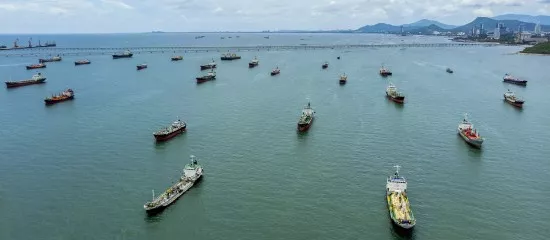
Freight or logistics companies and other businesses directly affected by the closure of the Strait of Hormuz or by air traffic disruptions are authorized to use short-time working, provided that they demonstrate a direct link between their activity and the events of the conflict, their impossibility to put in place alternative measures to compensate for their drop in activity and the non-existence of a contractual clause covering the resulting damage of the occurrence of the conflict.
Companies that suffer from raw material supply disruptions related to the conflict can also benefit from the short-time work scheme. To do this, they must demonstrate that there is a direct link between their activity and the events of this conflict (dependence on raw materials that are out of supply to operate, impossibility of redirecting the activity through the use of other raw materials, etc.) and that it is impossible for them to put in place alternative measures to compensate for their decline in activity.
What compensation?
When employees are on short-time working, employers are required to pay them an allowance for every hour not worked. This allowance must be at least 60% of the employee’s gross hourly wage, up to a maximum of 4.5 times the minimum wage—which amounts to €32.45 per hour in 2026. This allowance must not be lower than the net hourly minimum wage (€9.52 in 2026). In exchange, the State provides employers with a short-time work allowance for each hour not worked by their employees, equal to 36% of the employees’ gross hourly remuneration, capped at 4.5 times the minimum wage (with a maximum allowance of €19.47 in 2026). This allowance cannot, in principle, be less than €8.57.
Copyright : Les Echos Publishing 2026
Crédits photo : Kzenon - stock.adobe.com